Engineered to integrate seamlessly with global solar setups, utilizing Grade-A lithium cells with active balancing systems.
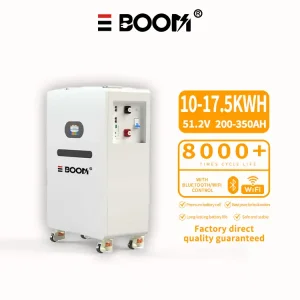
Designed for long lifecycle durability and flexible installation, utilizing automotive-grade lithium iron phosphate chemistry.
Learn More →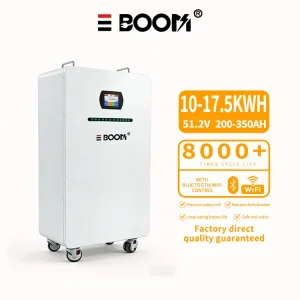
Direct-from-factory manufacturing ensures maximum quality control and high energy density matching modern hybrid inverters.
Learn More →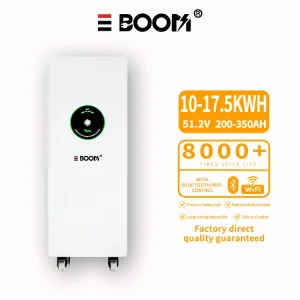
Saves valuable space while delivering exceptional discharge depth, boasting a compact structural footprint.
Learn More →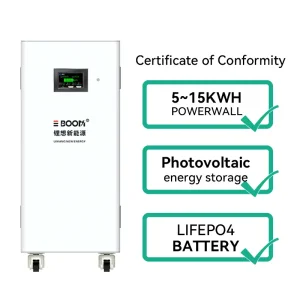
Designed for mobility and emergency backup deployment, enabling plug-and-play energy distribution.
Learn More →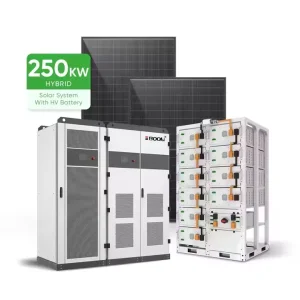
Integrated design combining robust power conditioning architecture with dense cell stacks for microgrid grids.
Learn More →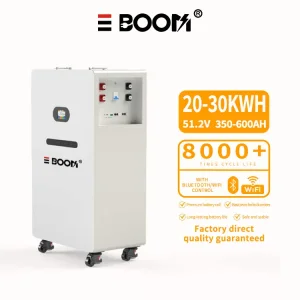
High-capacity customized energy packages offering stable performance and direct factory configuration backing.
Learn More →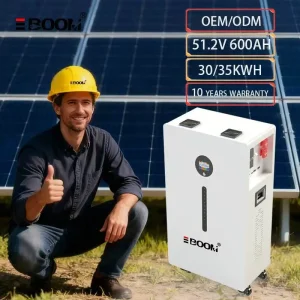
Engineered for critical outage response, boasting dynamic smart BMS protection parameters.
Learn More →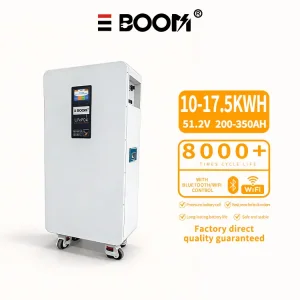
Premium cells engineered for sustained cycle-depth performance under global environmental profiles.
Learn More →As modern homes scale their electrical demands—integrating heat pumps, multi-zone central air conditioners, and high-amp Level 2 Electric Vehicle (EV) chargers—the limitations of traditional low-voltage battery configurations have become increasingly clear. For years, the residential energy sector relied on standard 48V (or nominal 51.2V) configurations. While safe and accessible, running a modern 10 kW household load on a 48V system forces currents to exceed 200 Amperes. According to Joule's Law (P = I²R), higher current generates quadratic heat dissipation. This calls for exceptionally thick copper cables, drives system temperatures up, and compromises safety margins.
Conversely, high-voltage systems (ranging from 200V to 400V+) demand costly installation procedures, specialized high-voltage certified installers, and complex safety components. The 72V nominal architecture (typically configured as 24S in LFP cells, operating at 76.8V nominal) represents the optimum middle-ground. It allows system engineers to cut system current by roughly one-third compared to 48V systems. This dramatically reduces thermal stress, increases overall round-trip efficiency, and remains within the Extra-Low Voltage (SELV) threshold under many international electrical guidelines, bypassing expensive high-voltage site permits.
At Jiangxi Lithium Idea Technology Co., Ltd., we build high-capacity home energy storage systems that prioritize both safety and reliability. By utilizing automotive-grade lithium iron phosphate (LiFePO4) cells sourced directly from industry leaders like EVE, Gotion High-Tech, and BYD, we achieve over 8,000 deep discharge cycles. Our manufacturing facility in Jiangxi integrates smart, multi-layered Battery Management Systems (BMS). These systems continuously track cell-level parameters, allowing developers, installers, and homeowners to maximize their solar energy harvests safely.
This whitepaper outlines the localized usage cases, engineering advantages, supply chain frameworks, and compliance standards that define the 72V residential storage market.
| System Architecture Parameter | Standard Low Voltage (48V / 51.2V) | Optimized Mid-Voltage (72V / 76.8V) | High Voltage Systems (200V - 400V) |
|---|---|---|---|
| Nominal Voltage Configuration | 16S (16 Cells in Series) | 24S (24 Cells in Series) | 80S to 120S+ Series Stacking |
| Current Draw for 10kW Output | ~195.3 Amperes | ~130.2 Amperes | ~25.0 to 50.0 Amperes |
| I²R Cable Thermal Loss Factor | 100% (Baseline Reference) | ~44% (56% Reduction in heat loss) | < 5% (Minimal thermal signature) |
| Safety / Installation Class | SELV (Safe Extra Low Voltage) | SELV (Typically under safe limits) | Class II / HV (High Shock Risk) |
| Required Cable Cross-Section | 50 mm² - 70 mm² (Heavy Copper) | 25 mm² - 35 mm² (Highly Flexible) | 6 mm² - 10 mm² (Standard Wire) |
| BMS Complexity & Balancing | Standard Active/Passive | Precision Multi-string Balancing | High Complexity Isolated BMS |
Founded on a mission to build a sustainable, low-carbon future, Jiangxi Lithium Idea Technology Co., Ltd. stands as a globally trusted manufacturer and supplier of integrated energy storage systems, inverters, and solar panels. Backed by 20 years of dedicated expertise in the renewable energy industry, we serve residential, commercial, and industrial customers worldwide, helping them secure energy independence, trim carbon outputs, and stabilize local power inputs.
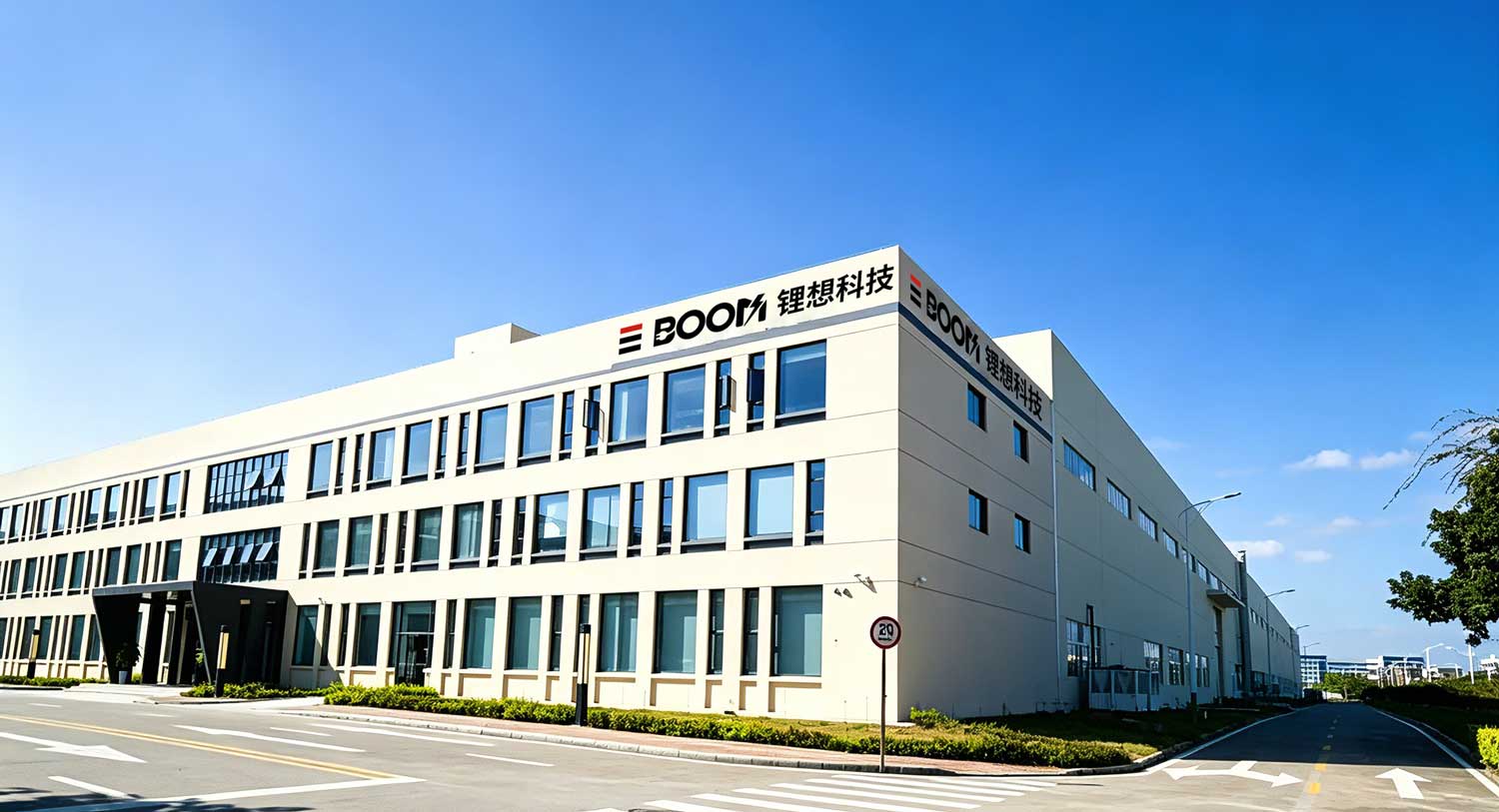
Our state-of-the-art manufacturing plant in Jiangxi spans over 7,000 square meters. It features fully automated assembly lines, high-precision cell sorting machines, laser welding technology, and advanced testing chambers. Our team of over 100 dedicated employees, including research and development engineers, quality assurance specialists, and technical support staff, ensures every product meets strict international standards of safety, quality, and performance.
We source only Class A automotive-grade lithium cells (including EVE, Gotion, and BYD Blade technologies). Our energy storage products are certified to global standards like UL1973, UL9540, and CE, and come backed by a 10-year remote warranty for dependable operation over decades.
How our battery systems adapt to regional grid standards, environmental conditions, and distinct power needs.
Designed for rapid integration with dynamic Time-of-Use (ToU) energy tariffs. The high efficiency of our 72V systems enables fast-charge cycles during off-peak hours and efficient discharge when grid pricing climbs. Its low thermal profile makes it ideal for compact basement or utility room installations across Western and Northern Europe.
Perfect for running heavy inductive loads (such as HVAC systems and well pumps) during winter outages and hurricane seasons. By pairing a 72V system with high-frequency hybrid split-phase inverters, homeowners can access high surge starting currents without tripping protection circuits or risking thermal events.
Built to handle extreme ambient temperatures in Australia's off-grid regions. The reduced operational current of the 72V setup limits heat generation within the battery pack, preventing high-temperature BMS throttling and helping safeguard your energy storage system from early thermal degradation.
How our ongoing engineering developments advance high-density storage technology.
Our standard residential systems now feature active balancing BMS configurations. This software monitors cell-level impedances, allowing for real-time adjustments and cloud-based diagnostics that help optimize overall cell health and prevent premature degradation.
We are actively adopting thin-profile blade cell form factors across our mid-voltage lines. By upgrading to blade cells, we can increase volumetric energy density by 30% while improving safety and cooling efficiency in compact wall-mounted enclosures.
Our research and development team is working on prototype systems built for next-generation semi-solid-state lithium chemistries. These upcoming designs will feature integrated Vehicle-to-Home (V2H) capabilities, allowing for bi-directional charging interfaces.
China remains the world's leading hub for lithium-ion battery manufacturing, housing over 75% of global cathode and anode processing capacity. Our production plant in Jiangxi takes direct advantage of this industrial ecosystem. Being close to major raw material suppliers and lithium processors reduces transit costs, secures battery cell supply, and keeps our pricing highly competitive.
By sourcing exclusively Class-A automotive-grade cells from established tier-1 manufacturers (like EVE, Gotion High-Tech, and BYD), we ensure that every cell entering our production line features highly uniform voltage and capacity profiles. This consistency is vital for maintaining cell balance in 72V nominal configurations over thousands of cycles.
Our factory processes are structured around modern, data-driven quality control frameworks. From automated cell sorting and precision laser busbar welding to multi-stage environmental chamber tests, each battery module undergoes rigorous testing. Before shipment, we subject every finished battery to full charge and discharge cycles, certifying capacity, testing BMS protection limits, and verifying communication protocols (CAN, RS485, Modbus).
This disciplined manufacturing process helps protect our global partners and customers from the warranty challenges and early field failures that often affect lower-tier energy storage suppliers.
How our engineering team develops modular solutions for larger businesses and localized microgrids.
Our rack-mounted designs allow users to scale capacity from 250kWh up to 1000kWh. They feature automated thermal monitoring and integrated safety isolation switches designed for light industrial complexes and commercial properties.
Our commercial systems help reduce demand charges by discharging during peak utility pricing periods, cutting commercial power bills and lowering reliance on the local grid during high-demand windows.
Equipped with advanced isolated BMS platforms and fast-acting fuses, our systems help shield the battery array from external grid voltage swings and surges.
Certified safety performance verified by leading international testing organizations.
Certifies cell safety under thermal, mechanical, and electrical stress, and validates integrated system safety for residential use.
Confirms alignment with EU safety requirements, focusing on the safe operation of secondary lithium batteries for industrial and stationary installations.
Verifies that our battery packaging design meets safety standards for air, sea, and land transport under challenging conditions.
Backed by remote diagnostics and dedicated service partners, providing long-term maintenance support and parts replacement.
Answering common technical questions about 72V home energy storage integration and applications.
At equivalent power outputs, a 72V nominal system operates at a higher voltage, allowing it to reduce system current by roughly 33% compared to a 48V system. Because cable power loss scales quadratically with current (P = I²R), this current reduction lowers line-resistance heat losses by up to 55%. The result is improved round-trip efficiency, less thermal generation, and reduced need for heavy copper cabling.
It depends on the inverter's input voltage range. Many modern hybrid inverters feature flexible battery input windows (often spanning 40V to 100V or higher). A 72V nominal LiFePO4 battery pack (operating between ~64V empty and ~84V fully charged) is compatible with inverters designed to support these wider mid-voltage inputs. Always verify the inverter manufacturer's DC voltage specifications before installation.
EVE, Gotion, and BYD are leading tier-1 manufacturers of automotive-grade LiFePO4 cells. Sourcing from these manufacturers ensures high consistency in cell impedance, capacity, and voltage profiles. This high uniformity is essential for maintaining cell balance in 24S series configurations, allowing the battery to safely achieve over 8,000 discharge cycles.
Our proprietary BMS features multi-stage safety protection, including cell-level over-charge and over-discharge thresholds, real-time temperature tracking at multiple thermal sensor points, short-circuit protection, and active cell balancing. It also supports standard communication protocols (CAN/RS485) for system monitoring and firmware updates.
Every battery pack undergoes a multi-stage testing process: cell capacity and voltage matching, laser welding quality checks, insulated high-voltage breakdown tests, and a full charge/discharge cycle test. This systematic testing ensures that all shipped systems meet our rated performance and safety specifications.
From solar panels and hybrid inverters to high-capacity industrial battery storage solutions.
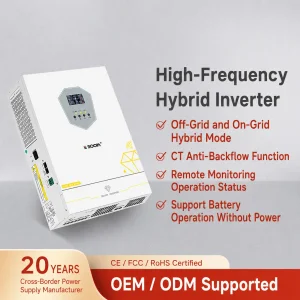
Features dual operation modes and live monitoring algorithms to support efficient home solar integration.
Learn More →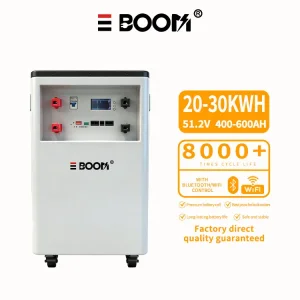
High-capacity storage designed for residential solar systems, backed by a 10-year warranty program.
Learn More →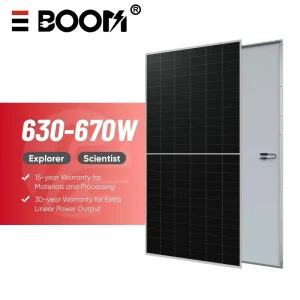
Monocrystalline panels with high conversion efficiency designed to withstand challenging weather conditions.
Learn More →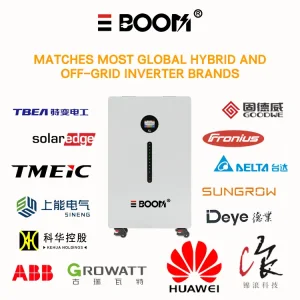
High-capacity residential battery packs built to provide dependable backup power during grid outages.
Learn More →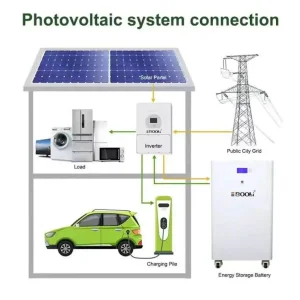
Features a mobile, wheeled design for flexible placement, certified to UL1973 and UL9540 standards.
Learn More →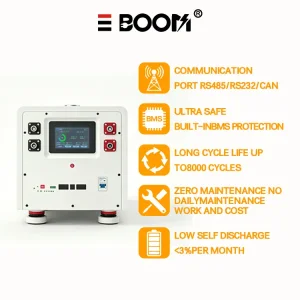
Utilizes BYD Blade cell technology to optimize safety and structural packaging density in residential setups.
Learn More →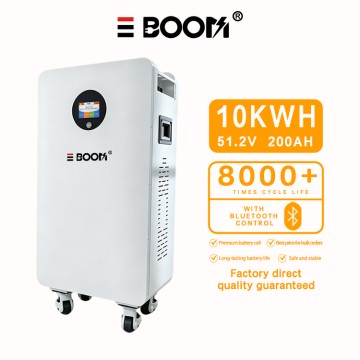
A portable energy station designed to supply emergency backup power for residential and outdoor activities.
Learn More →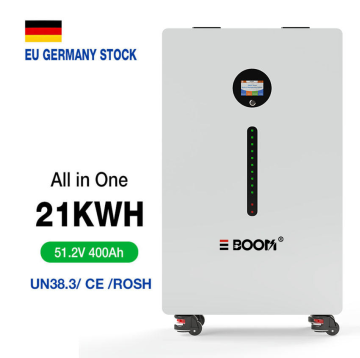
High-capacity wheeled mobile storage units built to handle deep cycling profiles and high surge startup demands.
Learn More → Lithium Idea