Whitepaper & Strategic Sourcing Guide

ODM 300 Amp Lithium Battery Manufacturers & Supplier

High-Current LiFePO4 Energy Storage Systems, Smart Custom BMS Architecture, and Global Supply Chain Integration

Featured High-Capacity Solutions

Direct manufacturer pathways for commercial, industrial, and high-durability residential energy storage integration.
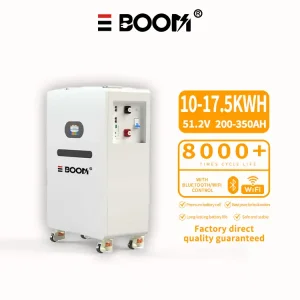
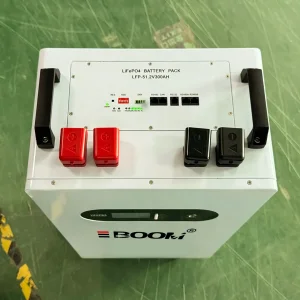
Discount Custom 51.2V 200Ah 300Ah LiFePO4 Battery

Discount Custom 51.2V 200Ah 300Ah LiFePO4 Battery 10kWh 15kWh

View Technical Data →
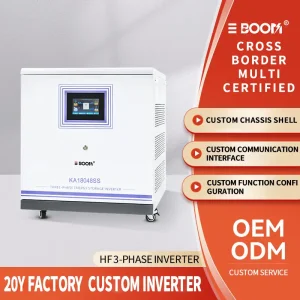
OEM 18kW 3 Phase Hybrid Solar Inverter

OEM 18kW 3 Phase Hybrid Solar Inverter with Built-in MPPT & WiFi

View Technical Data →
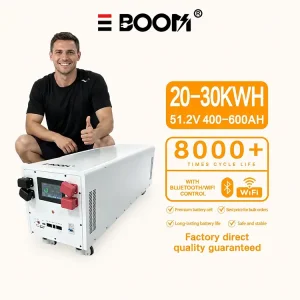
ODM Mobile Wheeled 20/25/30/35KWh Home Storage Battery

ODM Mobile Wheeled 20/25/30/35KWh Home Storage 48V 51.2V Battery System

View Technical Data →
OEM Mobile 21KWh BYD Blade Battery Storage

OEM China Suppliers Mobile 21KWh BYD Blade Battery Storage 51.2V 420Ah

View Technical Data →
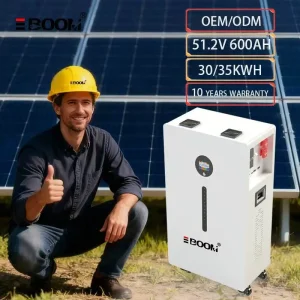
Discount China Suppliers 51.2V 400Ah 600Ah LiFePO4 Battery

Discount China Suppliers: 51.2V 400Ah 600Ah LiFePO4 Battery 20kWh Grade A

View Technical Data →
High-Quality Custom Mobile 20/25/30/35KWh Energy Storage

High-Quality Custom Mobile 20/25/30/35KWh Energy Storage with BMS

View Technical Data →
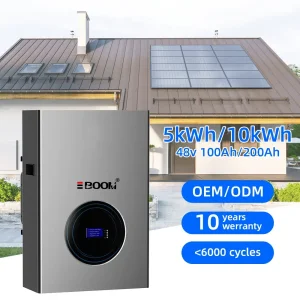
China 48V 100Ah 200Ah LiFePO4 Wall Mount Battery

China 48V 100Ah 200Ah LiFePO4 Wall Mount Battery 5kWh 10kWh

View Technical Data →
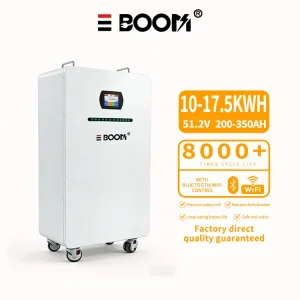
Discount 15KWh Wheeled Home Energy Storage Battery

Discount 15KWh Wheeled Home Energy Storage Battery with Smart BMS

View Technical Data →
Technical Analysis

The Paradigm Shift to 300 Amp Lithium Systems

Why modern commercial and industrial engineering designs are shifting towards 300A current paths and high-capacity battery configurations.

In the rapidly transforming landscape of global electrification, the engineering parameters for battery energy storage systems (BESS) have scaled beyond basic voltage increases. Today, the focus is heavily on current-carrying capacity, system longevity, and thermal stability. Among the most sought-after industrial specifications is the 300 Amp (and 300Ah cell capacity equivalent) lithium chemistry configuration. This configuration represents a critical intersection for medium-to-large residential platforms, commercial microgrids, and mobile power stations.

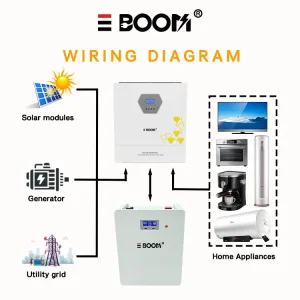
Standard lead-acid and early-generation lithium options (typically capped at 50A to 100A continuous discharge) struggle to meet the heavy startup currents demanded by modern heavy-duty machinery, hybrid solar inverters, and high-velocity electric drivetrains. By executing an ODM 300 Amp Lithium Battery configuration, developers can drive large-scale loads with minimized system complexity, lower cabling losses, and far superior thermal management parameters.

Key Engineering Takeaway: Standardizing on a 300A current path allows high-power hybrid systems (such as 3-phase 18kW to 100kW solar inverters) to run directly without complex parallel battery configurations, drastically reducing the points of failure in the system topology.
Global Procurement Analysis

Macro Dynamics Driving High-Capacity Battery Sourcing

Uncovering the procurement motivations, regulatory requirements, and technical criteria of international buyers.

Global procurement teams in North America, Europe, Australia, and parts of Africa face different, yet parallel challenges: rising energy grid instability, peak-tariff penalties, and strict carbon compliance laws. Sourcing agents are moving away from generic off-the-shelf storage systems. Instead, they require robust ODM (Original Design Manufacturer) partnerships capable of delivering tailored, high-current battery architectures.

Understanding these sourcing demands requires looking closely at the primary application channels:

  • Industrial & Commercial Peak Shaving: Businesses use 300A continuous systems to buffer the grid during high-demand periods. This helps them avoid steep peak-demand surcharges.
  • Telecom & Critical Infrastructure: Off-grid cell towers and data centers require massive current discharges (300A and above) to support heavy loads during grid blackouts.
  • Mobile Energy Storage (RVs, Special Vehicles, Marine): High-voltage EV modules and wheeled trolley storage systems require custom form factors with robust shock and vibration resistance.

Additionally, modern buyers focus on E-E-A-T criteria when selecting a manufacturer. Reliability is not just about cells; it's about certification compliance (UL 1973, CE, UN38.3), cell traceabilities, and long-term warranties backed by solid balance sheets.

Jiangxi Lithium Idea Technology Co., Ltd.

China Factory 4.0: Supply Chain Resilience & Quality Excellence

A 20-year legacy of manufacturing class-leading energy solutions backed by automated production and premium Tier 1 supply partnerships.

At Jiangxi Lithium Idea Technology Co., Ltd., we run our production lines using Industry 4.0 standards. Our facility is engineered for high consistency and yield. In battery manufacturing, minimal variance between cell capacities is essential to prevent early pack degradation. We only source Class A automotive-grade lithium-ion cells from world-renowned brands, including EVE, Gotion High-Tech, and BYD. This foundation allows us to produce systems with a cycle life of 8,000+ times at 80% Depth of Discharge (DoD) — far exceeding the industry standard of 3,000 to 5,000 cycles.

Our manufacturing workflow combines advanced laser welding, high-accuracy sorting systems, and fully automated testing modules. This process ensures each custom 300 Amp battery pack maintains thermal stability under extreme mechanical loads. By integrating our core components (including our proprietary Smart BMS) with Tier 1 cells, we offer an industry-leading 10-year remote warranty, ensuring decades of hassle-free operation.

20+
Years of Industry Experience
7000+
Square Meter Factory Area
8000+
Cycle Life (Grade A Cells)
100+
Countries & Regions Served
Technical Anatomy

Inside the ODM 300A Lithium Battery Architecture

A closer look at how smart engineering choices translate to safer, longer-lasting high-current energy storage.

Designing a system that safely manages 300 Amps of continuous current requires looking beyond the cell configuration. Every link in the electrical path must be optimized: busbars, fuses, contactors, and the Battery Management System (BMS). A standard BMS cannot handle 300A continuous currents; it requires specialized copper-plated PCB layers, heavy-duty MOSFETs or industrial contactors, and advanced thermal management to prevent localized hotspots.

Performance Specification Lithium Idea 300A LFP System Standard Industry 200A LFP Pack Conventional Lead-Acid System
Nominal Voltage & Chemistry 51.2V LiFePO4 (Grade A) 51.2V LiFePO4 (Mixed Grades) 48V Lead-Acid / GEL
Continuous Discharge Rating Up to 300 Amps 100A to 200A Maximum 50A to 80A Maximum
Cycle Life (80% DoD) 8,000+ Cycles 3,000 - 5,000 Cycles 800 - 1,200 Cycles
BMS Integration & Comms Smart BMS (RS485, CAN, Modbus) Basic Passive BMS None
Warranty Terms 10-Year Warranty & Remote Tech Support 3 to 5-Year Limited Warranty 1 to 2-Year Warranty
Safety Mechanisms Thermal Cut-offs, Active Fuses, Relays Basic Over-current Fuses None (High Off-gassing risks)
Technology Highlights

Proprietary Design Implementations

Explore the engineering features that make our 300A lithium batteries the benchmark for reliability.

⚙️

Custom Smart BMS Integration

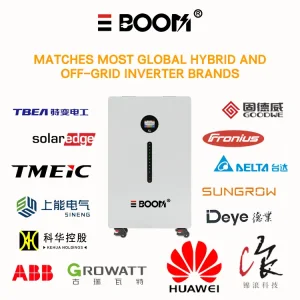
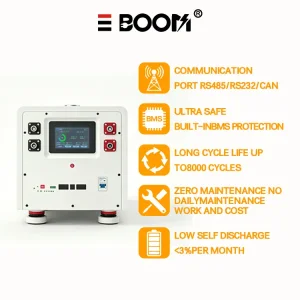
Our proprietary Battery Management Systems feature active cell balancing algorithms, real-time State-of-Health (SoH) diagnostics, and full integration with major hybrid inverter brands via CAN/RS485 protocols.

🔥

Advanced Thermal Runaway Mitigation

We design our battery enclosures with custom structural spacing and high-temperature flame-retardant barriers. This structural design isolates cells to prevent thermal cascading, ensuring safety under extreme high-current loads.

Automotive Grade Blade Technology

By using genuine BYD Blade cells and high-density EVE prismatic cells, our designs achieve a smaller footprint. This layout delivers maximum volumetric energy density while offering high structural durability.

Application Scenarios

Localized Applications & Performance Cases

Real-world integration examples demonstrating how the 300A platform handles challenging environments.

Because battery performance varies by climate, grid stability, and local regulations, Jiangxi Lithium Idea Technology designs custom variations optimized for specific regions:

1. North American High-Load Home Backup (US & Canada)

In regions prone to weather-driven power outages (such as winter storms and hurricanes), homeowners rely on high-capacity storage systems that can handle starting heavy loads, like 5-ton HVAC units and water pumps. A custom 300A battery configuration paired with an 18kW hybrid inverter delivers the necessary surge current, allowing seamless whole-home backup transition without stalling equipment.

2. European Commercial Peak Shaving (Germany, UK, France)

With high electricity tariffs and strict grid regulations in Western Europe, businesses use our 300A systems to store energy during off-peak times. The integrated smart BMS schedules discharges during peak hours to offset high commercial tariffs, offering commercial operations a rapid return on investment.

3. Off-Grid Agricultural & Remote Power (Australia)

Remote farms and outback stations require durable off-grid systems that can withstand high temperatures. Our 300A LFP systems feature active cooling and dust-proof, IP65-rated rolling enclosures. These systems provide consistent power for heavy irrigation pumps, water treatment plants, and rural workspaces.

High-Efficiency Energy Storage Portfolio

Explore our full range of solar, inverter, and battery storage products engineered for seamless compatibility.
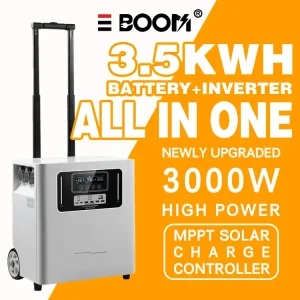
High-Quality Portable Wheeled Trolley Energy Storage System

High-Quality Portable Wheeled Trolley Energy Storage System 3.5KWH 5.5KWH

View Technical Data →
Discount China 51.2V LiFePO4 Battery Suppliers

Discount China 51.2V LiFePO4 Battery Suppliers - 5kWh/10kWh Factory

View Technical Data →
OEM Mobile 21KWh Backup Power BYD Blade Battery

OEM Mobile 21KWh Backup Power with BYD Blade Battery & Custom BMS

View Technical Data →
OEM 15kWh 51.2V 300Ah LiFePO4 Battery

OEM 15kWh 51.2V 300Ah LiFePO4 Battery - Grade A, 8000+ Cycles

View Technical Data →
Discount China Suppliers Factory 21KWh 51.2V 420Ah BYD Blade

Discount China Suppliers 21KWh 51.2V 420Ah BYD Blade Storage System

View Technical Data →
Discount Custom 51.2V 200Ah 300Ah LiFePO4 Battery

Discount Custom 51.2V 200Ah 300Ah LiFePO4 Battery from China Suppliers

View Technical Data →
China Suppliers Factory Mobile Wheeled 20/25/30/35KWh Home Battery

China Suppliers Factory Mobile Wheeled 20/25/30/35KWh Home Battery System

View Technical Data →
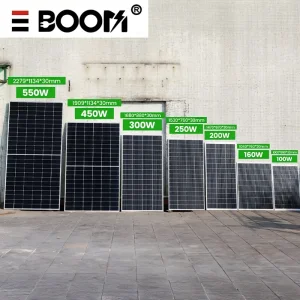
Discount High Efficiency Monocrystalline Solar PV Panels

Discount High Efficiency China Factory Monocrystalline Solar PV Panels 550-700W

View Technical Data →
FAQ

Technical Q&A: ODM 300 Amp Lithium Battery Engineering

In-depth structural, electrical, and commercial information for engineers and procurement managers.

What is the difference between a 300Ah cell capacity and a 300A continuous discharge battery rating? +
Ah (Amp-hours) measures the energy capacity of the battery (how long it can deliver a specific current over time). A (Amps) represents the instantaneous rate of electrical current flowing through the circuit. A 300Ah battery system can store 300 Amps of current for one hour. A battery system rated for 300A continuous discharge uses low-resistance busbars, thick cabling, and a high-current BMS. This design allows the pack to safely and consistently deliver a 300 Amp load without overheating, regardless of its total capacity.
Why is LiFePO4 (LFP) preferred over NMC chemistry for 300A industrial systems? +
While NMC chemistry has a higher volume energy density, LiFePO4 is safer, lasts longer, and has better thermal stability. High-current discharges (like 300A) generate significant internal heat. LiFePO4 has a high thermal runaway threshold (around 270°C, compared to NMC's 150-200°C), making it highly resistant to combustion. It also offers a much longer cycle life (8,000+ cycles versus NMC's 1,500-2,000 cycles), which dramatically lowers the lifetime cost of energy storage (LCOS).
How does the smart BMS manage cell variance in a 300A battery configuration? +
Our smart BMS monitors cell voltage, temperature, and internal resistance. Under a high 300A load, slight variances between cells can cause uneven discharging, which accelerates wear. The BMS uses active balancing circuitry to transfer charge from higher-voltage cells to lower-voltage ones. This maintains cell balance, protects against under-voltage and over-voltage, and helps prevent thermal runway.
What certifications are required to import 300A lithium batteries into Europe and North America? +
For safe transit and installation, these battery systems must meet international safety and shipping standards: UN38.3 for lithium battery transport, CE and EN 62619 for entry into Europe, and UL 1973 (covering energy storage systems) and UL 9540A (evaluating thermal runaway fire propagation) for North American markets. Sourcing certified systems ensures compliance with local building codes, insurance requirements, and safety regulations.
Can a 300A LiFePO4 battery pack be connected in series or parallel to scale capacity? +
Yes, our custom packs support both series and parallel configurations. However, configuring high-current packs (300A) in series or parallel requires matched internal resistance, matched cell voltages, and a coordinated BMS. Using our smart BMS with CAN bus links allows multiple packs to communicate with a central controller, balancing load and charge across the entire array.
What custom options are available through your ODM service? +
Our ODM service supports full hardware and software customization. We offer options to customize battery enclosure dimensions, layout configurations (wall-mounted, rolling wheeled trolley, or rack-mounted), IP ratings (IP20 to IP65), communication protocols (Modbus, CAN, RS485), and customized BMS programming to support third-party inverters. We also customize battery systems with custom branding, graphic interfaces, and specific thermal management hardware.
How does the 10-year warranty work for international commercial clients? +
Our 10-year warranty is supported by remote diagnostic interfaces integrated into our smart BMS. If a system anomaly is detected, our engineers can remotely access diagnostic logs via WiFi or GPRS to troubleshoot software issues, update BMS parameters, and locate faulty cells. If a physical part fails, we ship replacement components directly, backed by our international logistics partners to minimize downtime.
Why is sourcing Grade A cells critical for 300 Amp configurations? +
Grade A cells represent the highest quality output from tier-1 manufacturers (like EVE, BYD, and Gotion). They match their nominal capacity, have very low internal resistance, and degrade slowly. Lower-grade cells (Grade B or C) have higher self-discharge rates, variable capacities, and higher internal resistance. Under a high 300A load, this higher resistance generates extra heat, which accelerates wear and can cause safety issues.