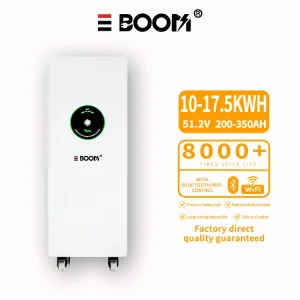
Understanding the internal cell chemistry, thermal dynamics, and battery management systems driving modern 100Ah Lithium Iron Phosphate (LiFePO4) solar storage technologies.
The 100Ah solar battery utilizes Grade A Prismatic LiFePO4 (Lithium Iron Phosphate) cells, characterized by an olivine crystal structure. This chemical composition exhibits structural resistance to thermal runaway up to 270°C, providing superior intrinsic safety over ternary NMC/NCA alternatives. With a nominal cell voltage of 3.2V, these cells are arranged in 4S (12.8V), 8S (25.6V), or 16S (51.2V) configurations to yield standard commercial voltage thresholds for global off-grid and hybrid solar applications.
Integrate industrial-grade microcontrollers with dual-layer active and passive balancing algorithms. The 100Ah BMS monitors individual cell voltages (±2mV precision), pack temperatures across multiple NTC thermistor zones, and continuous charge/discharge current via dual-MOSFET or contactor circuits. Advanced communication protocols—including CAN 2.0B, RS485, and Modbus RTU—ensure native interoperability with premier inverter brands (Victron, SMA, Deye, Solis, and Growatt).
By engineering low-impedance laser-welded busbars and utilizing high-density solid electrolyte interphase (SEI) film formation, our 100Ah cell series delivers >6,000 to 8,000 continuous charge-discharge cycles at 80% Depth of Discharge (DoD) under standard 0.5C conditions. Operating within a strict thermal window (0°C to 55°C charge, -20°C to 60°C discharge), the system retains over 70% state-of-health (SoH) even after 15 years of daily residential or light commercial usage cycles.
| Performance Metric | 100Ah LiFePO4 Module (Grade A) | Traditional Lead-Acid (AGM/GEL) | Ternary NMC Modules |
|---|---|---|---|
| Nominal Energy Density | 140 - 160 Wh/kg | 30 - 40 Wh/kg | 200 - 250 Wh/kg |
| Cycle Life (80% DoD) | 6,000 - 8,000+ Cycles | 500 - 1,200 Cycles | 1,500 - 2,500 Cycles |
| Usable Discharge Depth (DoD) | 90% - 100% Usable | 50% Max Recommended | 80% - 90% Usable |
| Thermal Runaway Threshold | 270°C (High Safety) | 150°C (Gas Venting Risk) | 210°C (Thermal Risk) |
| Levelized Cost of Storage (LCOS) | ~$0.04 / kWh per cycle | ~$0.18 / kWh per cycle | ~$0.11 / kWh per cycle |
| Maintenance & Monitoring | Zero maintenance + IoT Smart BMS | Regular top-ups / Inspection | BMS cooling maintenance |
Leveraging two decades of integrated clean-tech engineering, raw lithium material proximity, and automated assembly processes to deliver cost-effective energy solutions globally.
For over 20 years, Jiangxi Lithium Idea Technology Co., Ltd. has established itself as a premier Chinese manufacturer of high-density battery energy storage systems (BESS), solar hybrid inverters, and monocrystalline PV modules. Our vertically integrated production complex spans 7,000+ square meters, encompassing automated cell-sorting lines, laser micro-welding stations, dynamic age-testing chambers, and automated final packaging loops.
We source exclusively Grade A automotive-class lithium iron phosphate cells from world-leading chemical suppliers, including EVE, Gotion High-Tech, and BYD. Every single cell undergoes rigorous 4-stage internal resistance matching, capacity sorting, and automated thermal-cycle screening before entering pack assembly line—ensuring minimal voltage deviation (<5mV) across string topologies.
China controls over 70% of the world's refined lithium cathode synthesis and cell manufacturing capacities. Located in Jiangxi province—a major center for lithium processing and battery research—our factory benefits directly from streamlined raw-material supply loops, reduced domestic logistics overhead, and rapid engineering iterations.
Flexible manufacturing workflows engineered to satisfy regional energy regulations, brand branding needs, and unique mechanical installation conditions for commercial clients.
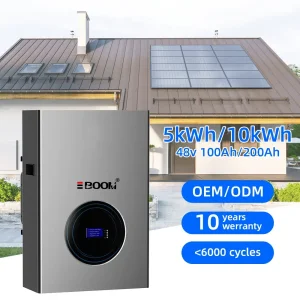
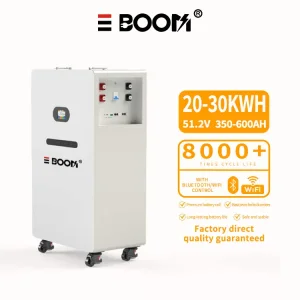
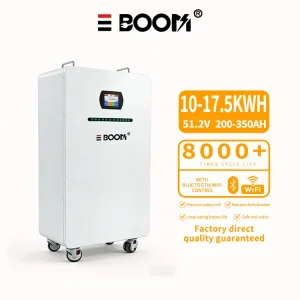
Our factory supports custom enclosure manufacturing to match physical site constraints: compact Wall-Mounted chassis (5kWh - 10kWh), standard 19-inch Server Rack modules (48V/51.2V 100Ah), Wheeled Mobile Storage Units (15kWh - 30kWh) equipped with heavy-duty castors for temporary sites, and IP65-rated NEMA 4X outdoor cabinets with embedded HVAC cooling systems.
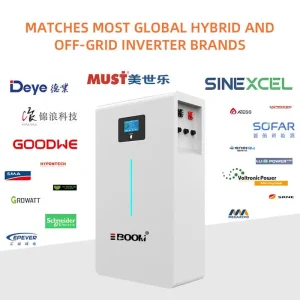
Different solar inverters use distinct CANbus and RS485 communication protocols. Our soft-development engineering team configures BMS protocol pre-sets (including Victron Energy, Deye, Megarevo, GoodWe, Growatt, and Solis auto-detection routines) prior to export, eliminating field commission delays and inverter communication faults for regional distributors.
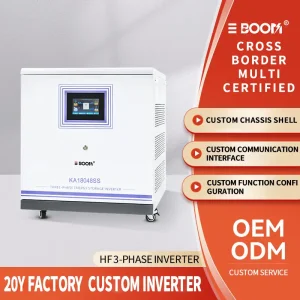
Complete B2B brand support: Custom powder-coated sheet metal colors, laser-etched stainless steel logo plates, customized LCD display software interfaces displaying client company logos, multi-lingual installation manuals, and UN38.3 compliant heavy-duty wooden crate packaging certified for sea and air freight.
Ensuring seamlessly compliant global deployment through rigorous third-party certifications and multi-national technical support infrastructures.
Navigating global import hurdles requires verifiable safety compliance. All Jiangxi Lithium Idea 100Ah solar battery configurations adhere to stringently enforced global standards:
To reduce global warranty lead times and maintain uninterrupted uptime for end users, our factory provides a multi-tiered localized service ecosystem:
From residential self-consumption optimization to heavy-duty off-grid telecom infrastructure, 100Ah battery modules supply dependable energy density.
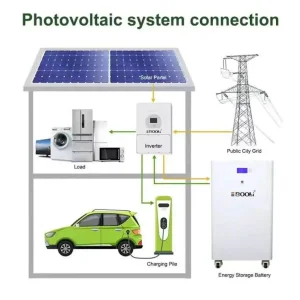
Configured in 48V/51.2V 100Ah wall-mounted or stacked configurations (5kWh to 30kWh capacity), our batteries capture peak daytime solar generation. Integrated with hybrid inverters, they automatically transition to backup power within 10 milliseconds during grid blackouts, powering HVAC systems, refrigeration, and critical home circuits without disruption.
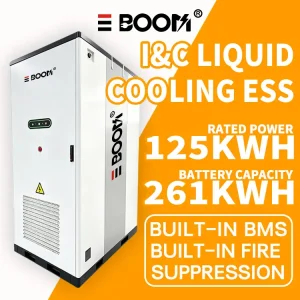
By connecting multiple 100Ah rack modules in series and parallel topologies, commercial facilities construct medium-scale storage systems (up to 100kWh–1MWh). These systems shave expensive peak demand tariffs, absorb localized industrial solar power, and supply instant backup power for critical servers, cold storage facilities, and small factories.
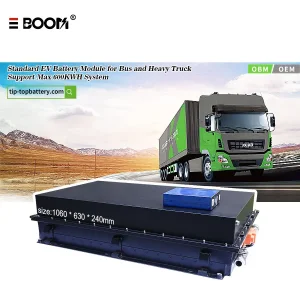
Engineered for high-vibration and wide-temperature environments, customized 100Ah modules deliver constant DC power to remote cellular towers, mining off-grid nodes, and specialized high-voltage EV battery platforms (heavy trucks, electric buses, marine vessels, and industrial golf carts).
Key technological transitions redefining the production, intelligent management, and lifecycle economic value of solar battery infrastructure.
The next generation of 100Ah battery management systems moves beyond basic threshold monitoring to dynamic neural-network state estimation. By aggregating real-time internal resistance trends, temperature gradients, and charge-discharge rates in the cloud, AI algorithms predict micro-shorting scenarios weeks before failure occurs, boosting battery pack safety standards globally.
While 100Ah LiFePO4 cells remain the gold standard for modular, localized installations due to easy handling and low failure impact, mega-scale utility systems are adopting 280Ah and 314Ah cells. Concurrently, hybrid Sodium-Ion / LiFePO4 pack architectures are entering mass manufacturing, offering operational discharge capabilities down to -40°C without requiring active thermal pre-heating.
Direct answers to technical, commercial, and logistical inquiries regarding 100Ah solar battery procurement from China.
Under standard conditions (25°C, 0.5C charge/discharge rate, and 80% Depth of Discharge), a Grade A 100Ah cell configuration delivers between 6,000 and 8,000 full cycles before reaching 80% of its initial rated capacity. In daily solar self-consumption usage (1 cycle/day), this translates to an operational lifespan exceeding 15 years.
Our standard 48V/51.2V 100Ah modular rack units support up to 15 to 32 units connected in parallel without requiring an external master controller box, providing up to 163.8kWh of total storage. The integrated smart BMS utilizes master-slave CANbus auto-addressing to balance charge/discharge currents automatically and prevent high circulating cross-currents.
Grade A cells are directly sourced from Tier-1 manufacturers (EVE, BYD, Gotion) with guaranteed original capacity, minimal AC internal resistance (<0.5mΩ), precise factory matching, and complete traceability. Repurposed or Grade B cells often exhibit uneven degradation, higher self-discharge rates, and risk premature pack failure within 1–2 years of operational use.
Yes. Our engineering team pre-programs multi-protocol BMS firmware supporting native RS485 and CAN communications with top international hybrid inverter brands, including Victron, Deye, Solis, Luxpower, Growatt, GoodWe, and SMA. Open RS485 protocols are also provided for proprietary system integrators.
We supply full UN38.3 test reports, Material Safety Data Sheets (MSDS), Safety Transport Certificates for Sea and Air (issued by Shanghai Institute of Chemical Industry), and certified non-hazardous packaging documentation to facilitate smooth port customs clearance in Europe, North America, LATAM, and Australia.
 Lithium Idea