A Lithium Ferrite Battery sounds like a clearly defined battery type, but the name can be confusing. In many product discussions, people may use it when they mean a lithium iron phosphate battery, commonly called LFP. Its cathode material is lithium iron phosphate, LiFePO4. Lithium ferrite, often written as LiFe5O8, is a different material. It is not a standard name for a widely established commercial battery chemistry. That distinction matters.
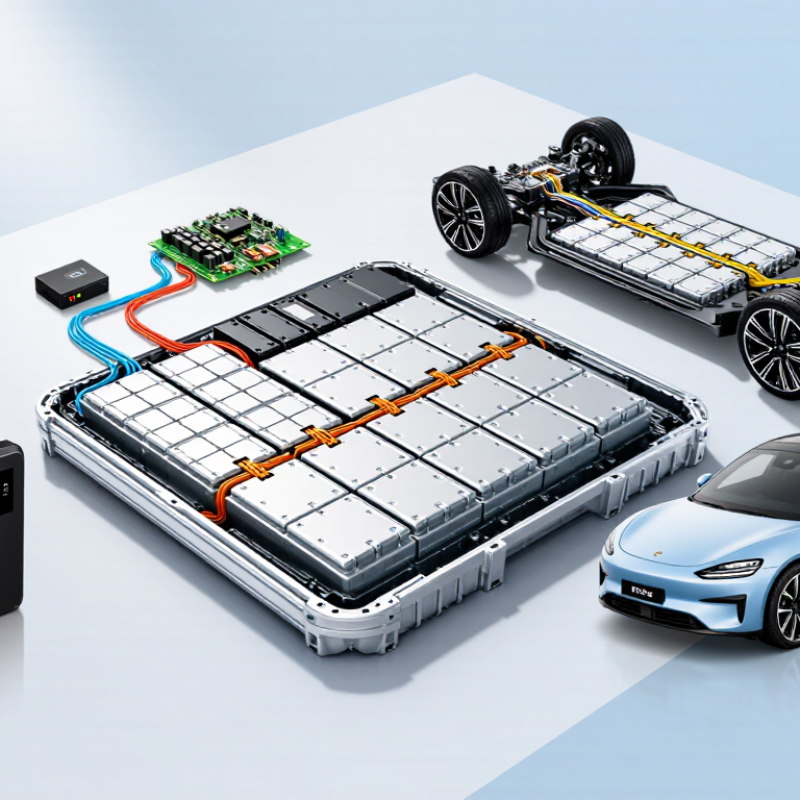
This guide explains the terminology before comparing performance. It looks at how an LFP cell stores and releases energy, and why its chemistry is valued for thermal stability and long service life. Picture a battery pack in an electric vehicle or a home energy system: cells connect in series and parallel, while a battery management system monitors voltage and temperature. The pack’s actual lifespan depends on design, operating conditions, charging habits, and other factors—not chemistry alone. Details matter.
We’ll also consider energy density, charging behavior, cost, and practical applications. These trade-offs help readers assess whether an LFP battery suits a vehicle, backup system, or portable device. If a source specifically claims to use lithium ferrite, check its chemical formula and technical documentation. The label alone is not enough. Even familiar terms are sometimes used loosely, and that deserves a closer look.
“Lithium ferrite” generally refers to LiFe₅O₈, a lithium–iron oxide with a spinel structure. Its formula contains lithium, iron, and oxygen; there is no phosphorus. The name can be confusing. “Lithium ferrite battery” does not, by itself, specify one universally standardized cell chemistry. Researchers study lithium ferrite materials for electrochemical applications, but the label alone cannot tell you how a particular cell performs.
LiFePO₄ is different. Its formula includes phosphorus, and it forms a phosphate-based crystal structure. It is widely used as a rechargeable battery cathode material. The formulas are not interchangeable: LiFe₅O₈ and LiFePO₄ have different compositions and structures, so their expected behavior and testing cannot simply be assumed to match. Check the exact formula in a technical description, rather than relying on a shortened name. A formula is a clue, not a datasheet. Performance also depends on factors such as particle preparation, electrode design, and test conditions. Even that distinction can be easy to overlook in a brief product description.
| Comparison dimension | Lithium ferrite (LiFe₅O₈) | Lithium iron phosphate (LiFePO₄) |
|---|---|---|
| Chemical name | Lithium iron oxide, commonly called lithium ferrite. | Lithium iron phosphate, commonly abbreviated LFP. |
| Chemical formula | LiFe₅O₈ | LiFePO₄ |
| Formula distinction | Contains one lithium atom, five iron atoms, and eight oxygen atoms per formula unit. | Contains lithium, iron, phosphorus, and oxygen in a 1:1:1:4 atomic ratio. |
| Typical iron oxidation state | Iron is typically Fe³⁺. The charges balance with Li⁺ and eight O²⁻ ions. | Iron is typically Fe²⁺ in the fully lithiated compound. The phosphate group is PO₄³⁻. |
| Crystal structure | An ordered spinel-type ferrite structure. | An olivine-type phosphate structure. |
| What the name refers to | A lithium-containing iron oxide material; the formula alone does not define a complete battery. | A specific electrode material widely used as the cathode active material in rechargeable lithium-ion cells. |
| Established battery role | Not a standard, widely commercialized lithium-ion battery chemistry. It is important to distinguish the ferrite material from a complete battery system. | A well-established lithium-ion cathode material. A working cell also requires an anode, electrolyte, separator, and other components. |
| Theoretical specific capacity | No single standard commercial battery capacity should be inferred from the formula alone; performance depends on the electrode reaction and cell design. | Approximately 170 mAh/g for the one-lithium-per-formula-unit reaction. |
| Practical interpretation | “Lithium ferrite battery” can be ambiguous. Check whether the source means LiFe₅O₈ itself or a particular experimental cell using it. | “LFP battery” generally refers to a lithium-ion cell whose cathode active material is LiFePO₄. |
| Quick identification | Look for the subscript ₅ after Fe and the absence of phosphorus: LiFe₅O₈. | Look for phosphorus and the phosphate group: LiFePO₄. |
Key takeaway: LiFe₅O₈ and LiFePO₄ are different compounds with different structures and chemical roles. Lithium ferrite should not be used as another name for the established LiFePO₄ battery chemistry.
It is the theoretical capacity of the active material, based on exchanging roughly one lithium ion and one electron per formula unit. It is a benchmark, not a guaranteed battery reading.
Some particles may not contribute fully. Current rate, temperature, particle size, electrode thickness, and manufacturing quality all affect measured capacity. Separators and casing add weight without contributing to this material-level figure.
About 3.2 volts. Nominal voltage is a reference, not a constant reading. Details matter.
No. Voltage changes with charge level, current, temperature, and cell condition. A heavy load can cause a brief dip, so a running device may show a different reading than a rested cell.
About 12.8 volts. Actual charging and low-voltage limits depend on the cell specifications and battery-management design. The nominal figure is not a charging target.
Not yet. The term can refer to different lithium–iron oxide materials. Check the exact chemical formula and crystal structure before comparing research results.
Look for full-cell results, repeated-cycle performance, charging speed, and temperature range. A strong first-cycle result can fade. That deserves a second look.
Challenges include scaling production, maintaining consistent material quality, and competing with established chemistries. Public market data rarely tracks these materials separately, so confident market-size claims remain premature.
A Lithium Ferrite Battery uses lithium iron oxide materials such as LiFe₅O₈, which is chemically distinct from lithium iron phosphate, LiFePO₄. LiFe₅O₈ has a spinel-type crystal structure, and its iron ions are involved in redox reactions as lithium moves in and out during charging and discharging. Understanding this structure and chemistry is important when evaluating the material’s potential as an electrode, since its behavior cannot be assumed to match that of phosphate-based cells.
LiFePO₄ provides a useful benchmark: its theoretical specific capacity is about 170 mAh/g, and its cells typically have a nominal voltage of 3.2 V. Lithium ferrite research explores whether its composition and structure can support useful energy storage, but practical performance, cycle life, and manufacturing consistency remain important challenges. Further materials research and testing are needed before its potential applications and prospects for commercialization can be assessed reliably.

 Lithium Idea