What Is a Li Ion Solar Battery and How Does It Work?

Time:2026-10-22 Author:Liam
0%

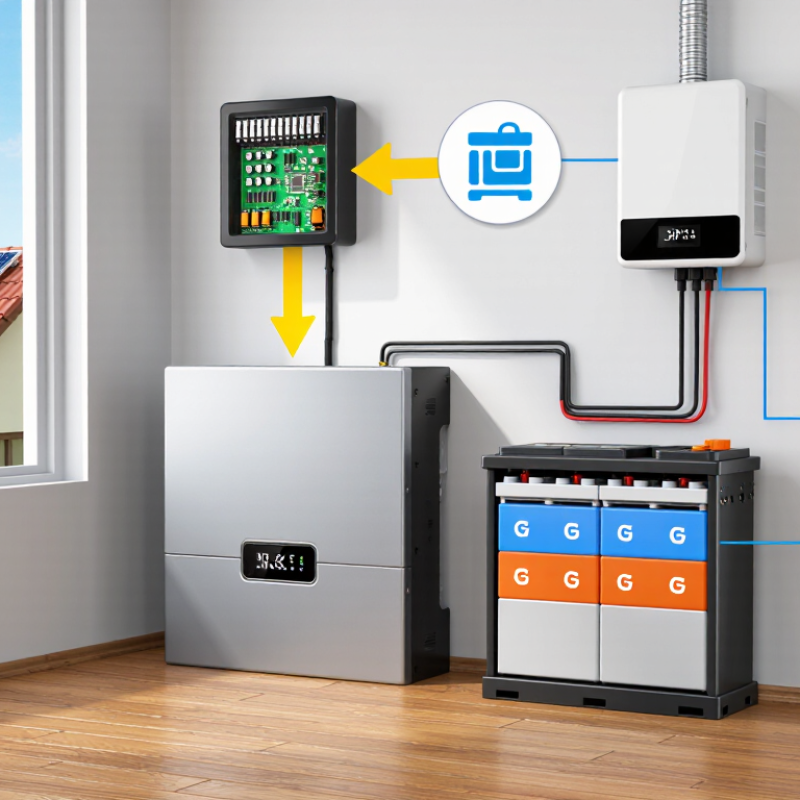
A Li Ion Solar Battery stores electricity produced by solar panels for later use. During sunny hours, photovoltaic cells generate direct current, while a charge controller regulates the battery’s charging process. Inside the battery, lithium ions move between the anode and cathode through an electrolyte. This movement stores energy and releases it when your home needs power. An inverter then converts the battery’s direct current into alternating current for appliances such as refrigerators, lights, and pumps.

The system also includes a battery management system, often called a BMS. It monitors voltage, temperature, current, and cell balance. This protection helps prevent excessive charging, deep discharge, and unsafe heat buildup. In practical installations, battery capacity should match household demand, solar production, and expected backup time. A larger battery is not automatically better. It may cost more and remain underused.

Lithium iron phosphate, or LFP, is widely selected for solar storage because it offers strong thermal stability and a long service life. Still, performance depends on installation quality, operating temperature, charging limits, and maintenance. Real-world results can differ from laboratory ratings. That detail matters. This guide explains how a Li Ion Solar Battery works, what its main components do, and how to evaluate its safety, efficiency, lifespan, and value before installation. Reliable advice should come from manufacturers, qualified installers, and clearly documented test standards. Erotiske
What Is a Li Ion Solar Battery and How Does It Work?

Li-Ion Solar Battery Basics: Cells, Modules, and Typical 3.6–3.7 V Voltage

A lithium-ion solar battery stores electricity through electrochemical reactions inside rechargeable cells. Each cell usually has a nominal voltage of 3.6–3.7 volts. This figure is not the battery’s constant output. Voltage changes with charge level, temperature, and electrical load. A fully charged cell may rise above its nominal value, while a nearly empty cell drops lower.

Cells connect in series to increase voltage. For example, several cells can create a higher-voltage battery pack for an inverter. Cells may also connect in parallel to increase capacity and current delivery. These combined units form modules, and multiple modules can create a complete storage system. The arrangement must be carefully matched. One weak cell can limit the whole pack.

A battery management system monitors voltage, temperature, and current. It can balance cells and disconnect the pack during unsafe conditions. In field inspections, loose connections and poor ventilation often cause avoidable problems. Installation records should include voltage readings and operating temperatures. A 3.7-volt label is only a reference point. Real performance depends on chemistry, design, charging limits, and daily use. This is easy to overlook. Even accurate specifications need practical verification.

How Lithium-Ion Cells Store Solar Energy Through Reversible Ion Movement

What Is a Li Ion Solar Battery and How Does It Work?

A lithium-ion solar battery stores solar energy as chemical energy inside rechargeable cells. Solar panels produce electricity, but the battery does not simply hold it like water in a tank. During charging, lithium ions move through the electrolyte from the positive electrode to the negative electrode. Electrons travel through an external circuit. This separation stores energy inside the cell. The movement is reversible.

When a home needs power, the ions travel back toward the positive electrode. Electrons then flow through the connected circuit and operate lights, appliances, or control equipment. This process repeats many times, although never perfectly. Heat, charging speed, and age slowly reduce capacity. A battery management system monitors voltage, temperature, and current. It can limit charging when conditions become unsafe or inefficient. Real systems are more complicated than diagrams suggest.

Tips: Keep the battery within its recommended temperature range. Avoid placing it in direct afternoon heat. Use professional installation and inspect cables regularly. A monitoring app may show charge levels, but those readings are estimates, not absolute measurements. Depth of discharge also matters. Gentle, steady cycling usually supports longer service life, while constant full discharge can increase wear. Solar output changes with clouds, shade, and season, so battery sizing should reflect actual household demand.

Battery Management Systems: Balancing, Safety, and 80–90% Depth of Discharge

What Is a Li Ion Solar Battery and How Does It Work?

A lithium-ion solar battery stores excess electricity for evening use, outages, or cloudy hours. Its battery management system, or BMS, controls the cells inside each module. It measures voltage, current, temperature, and estimated state of charge. Small sensors work continuously. If one cell rises too quickly, the BMS can reduce charging or disconnect the pack.

Cell balancing is equally important. Lithium-ion cells do not age at exactly the same rate. Passive balancing releases tiny energy amounts as heat, while active balancing transfers energy between cells. Both methods help prevent weak cells from limiting the entire battery. The International Energy Agency reported in Batteries and Secure Energy Transitions (2024) that lithium-ion battery prices fell by 14% in 2023. Lower costs encourage larger home storage systems, but safety controls remain essential.

Many solar systems advertise 80–90% depth of discharge. This means a 10-kilowatt-hour battery may provide roughly 8–9 kilowatt-hours before recharging. Operating within this range can reduce stress compared with repeated full discharges. The U.S. National Renewable Energy Laboratory’s Battery Energy Storage System Evaluation Methodology emphasizes measuring usable energy, efficiency, and availability separately. That distinction matters. A battery may show 90% capacity yet deliver less during cold weather, high loads, or aging. Real homes are messier than test conditions. A BMS improves protection, but it cannot repair poor installation, blocked ventilation, or inaccurate capacity estimates.

What Is a Li Ion Solar Battery and How Does It Work? - Battery Management Systems: Balancing, Safety, and 80–90% Depth of Discharge

Data Dimension Typical Value or Range How It Relates to Solar Storage
Battery type Rechargeable lithium-ion battery Stores electricity generated by solar panels and supplies it later when solar production is low or demand is high.
Common lithium chemistry Lithium iron phosphate (LFP) and nickel-manganese-cobalt (NMC) LFP is widely selected for stationary storage because of its thermal stability and long cycle life; NMC offers high energy density but requires careful thermal and electrical control.
Nominal cell voltage Approximately 3.2 V for LFP; approximately 3.6–3.7 V for many NMC cells Cells are connected in series to create the voltage required by a solar inverter or DC system.
Typical system voltage 12 V, 24 V, 48 V, or higher-voltage battery systems Higher-voltage systems can reduce current for the same power, which may lower cable losses and support larger storage installations.
Energy capacity Common residential sizes: about 5–20 kWh per battery unit Usable capacity depends on the rated capacity, permitted depth of discharge, reserve setting, temperature, and battery age.
Depth of discharge (DoD) 80–90% commonly used for daily cycling A 10 kWh battery operated at 90% DoD provides approximately 9 kWh before conversion losses and reserve limits.
Round-trip efficiency Approximately 85–95% for the complete storage system Energy is lost during charging, battery storage, discharging, wiring, and inverter conversion.
Cycle life About 2,000–8,000 equivalent full cycles, depending on chemistry and operating conditions Shallower cycling, moderate temperatures, controlled charging, and appropriate current levels generally improve service life.
Charge source Solar inverter, charge controller, or compatible hybrid inverter The charging equipment regulates voltage and current so the battery receives a suitable lithium-ion charging profile.
Main BMS function Monitors and controls individual cells and the battery pack The Battery Management System helps maintain operation within safe voltage, current, temperature, and state-of-charge limits.
Cell voltage monitoring Individual cell measurements collected continuously or at defined intervals Detects overvoltage, undervoltage, abnormal cell behavior, and imbalance within a series-connected pack.
Cell balancing Passive balancing is common; active balancing is used in some advanced systems Balancing reduces voltage differences between cells, helping preserve usable capacity and prevent the highest-voltage cell from limiting charging.
Overcharge protection Charging is reduced or disconnected when a cell reaches its upper safety threshold Protects cells from excessive voltage that can accelerate degradation and increase safety risk.
Over-discharge protection Load output is limited or disconnected at the lower voltage threshold Prevents deep discharge that can permanently reduce cell capacity or cause cell damage.
Overcurrent and short-circuit protection Electronic controls, fuses, contactors, or a combination of these devices Interrupts abnormal current conditions and helps protect cells, cables, connectors, and power electronics.
Temperature protection Temperature sensors with charging and discharging limits Charging may be restricted at low temperatures, while high-temperature operation can trigger current reduction or shutdown.
State of charge (SoC) Estimated percentage of remaining charge, from 0% to 100% The BMS estimates SoC using voltage, current integration, temperature, and calibration data.
State of health (SoH) Estimated remaining capacity and performance compared with the original condition SoH helps indicate aging caused by cycle count, calendar time, temperature, and operating stress.
Solar charging sequence Solar panels → charge controller or inverter → BMS-controlled battery pack The system converts and regulates solar power before the battery stores it as chemical energy.
Discharging sequence Battery pack → inverter or DC loads → household or backup circuits Stored chemical energy is converted into electrical power for appliances, equipment, or the grid where permitted.
Recommended operating approach Use the manufacturer’s voltage, current, temperature, and DoD limits Correct installation, ventilation, compatible equipment, and regular BMS fault monitoring support safe and reliable operation.

Note: Values are representative ranges for lithium-ion solar storage systems. Actual limits vary by cell chemistry, pack design, temperature, inverter settings, and applicable safety standards.

Solar Charging and Home Power Delivery at 85–95% Round-Trip Efficiency

A lithium-ion solar battery stores electricity as chemical energy, then releases it when sunlight fades. Solar panels send direct current through an inverter and battery-management system. The battery stores energy in lithium-ion cells. During evening use, the inverter converts stored power into household alternating current.

Round-trip efficiency measures energy returned after charging and discharging losses. If 10 kilowatt-hours enter the battery, an 85–95% system may deliver 8.5–9.5 kilowatt-hours later. Lazard’s 2024 Levelized Cost of Storage analysis uses approximately 85% round-trip efficiency for lithium-ion storage. NREL’s 2024 Annual Technology Baseline also models battery systems near this range.

Real homes may perform differently. Heat, partial cycling, inverter standby power, and aging all reduce usable output. That last detail is easy to underestimate.

Tips: Place the battery in a cool, shaded, ventilated area. Keep cables short and properly sized. Ask for measured system efficiency, not only cell efficiency. A bright 5-kilowatt solar array can still deliver less power during clouds, high temperatures, or evening demand peaks. Capacity also matters. A 10-kilowatt-hour battery may not provide 10 usable kilowatt-hours if its reserve setting protects battery life. Door-to-door testing is useful. Record solar input, battery output, and household consumption for several days. Mistakes happen. The measurements reveal them.

Performance Benchmarks: 150–250 Wh/kg Energy Density and 2,000–6,000 Cycles

What Is a Li Ion Solar Battery and How Does It Work?

A lithium-ion solar battery stores electricity from photovoltaic panels for later use. During daylight, a charge controller directs surplus power into battery cells. At night, an inverter converts stored direct current into household alternating current. The battery management system monitors voltage, temperature, and current during each cycle.

Performance Benchmarks: 150–250 Wh/kg Energy Density and 2,000–6,000 Cycles

Energy density commonly ranges from 150 to 250 Wh/kg at the cell level. A complete battery pack usually delivers less because of casing, wiring, cooling, and safety electronics. This distinction matters when comparing storage size, transport weight, and installation space. Real conditions differ. High temperatures, deep discharges, and poor charging control can reduce usable capacity and cycle life.

Many systems are rated for 2,000 to 6,000 cycles, depending on chemistry, operating limits, and testing methods. One cycle may mean a full discharge and recharge, or several partial cycles combined. At home, moderate daily use can protect the cells better than repeated full depletion. I would not treat the highest figure as a guarantee. Installation records, measured temperature, and actual depth of discharge often reveal more than a headline specification. A dusty outdoor enclosure or undersized inverter can quietly weaken performance. The numbers need context.

FAQS

What is a lithium-ion solar battery?

It stores surplus solar electricity as chemical energy inside rechargeable cells. It saves power for later use.

How does the battery store solar energy?

During charging, lithium ions move through the electrolyte toward the negative electrode. Electrons travel through an external circuit.

How does the battery supply electricity at night?

Lithium ions move back toward the positive electrode. An inverter changes stored direct current into household alternating current.

What does the battery management system do?

It monitors voltage, temperature, and current. It can limit charging when conditions become unsafe or inefficient.

How much energy can these cells store?

Cell-level energy density commonly ranges from 150 to 250 Wh/kg. The complete pack stores less.

How long can a lithium-ion solar battery last?

Many systems are rated for 2,000 to 6,000 cycles. Actual life depends on chemistry, temperature, and discharge depth.

Does one cycle always mean a full discharge?

Not always. Several partial discharges may combine into one equivalent cycle, depending on the testing method.

How can homeowners reduce battery wear?

Keep the battery within its recommended temperature range. Avoid direct afternoon heat and repeated full depletion.

Are monitoring-app readings perfectly accurate?

No. They are estimates. Temperature, aging, and measurement limits can affect the displayed charge level.

What should be considered when sizing the battery?

Match storage capacity with household demand, solar variation, and inverter limits. Clouds and seasonal shade can change available energy.

Conclusion

A Li Ion Solar Battery stores electricity generated by solar panels for use when sunlight is limited or unavailable. It is built from individual lithium-ion cells, which are grouped into modules to create a practical storage system. Each cell typically operates at about 3.6–3.7 volts and stores energy through the reversible movement of lithium ions between internal electrodes. During charging, solar-generated electricity drives the ions into a higher-energy position; during discharge, their movement produces electricity for household use.

A battery management system monitors voltage, temperature, and current while balancing the cells to improve safety and service life. Many systems are designed for an 80–90% depth of discharge, allowing most of the stored energy to be used without excessive stress. Solar charging and home power delivery can achieve approximately 85–95% round-trip efficiency. Depending on the design, these batteries may provide an energy density of around 150–250 Wh/kg and support roughly 2,000–6,000 charge cycles.


Liam

Liam

Liam is a dedicated marketing professional with a profound expertise in the industry, where he excels at highlighting the unique advantages of our core products. With a keen understanding of market trends and consumer needs, Liam frequently updates our company’s professional blog, providing......