Choosing a Domestic Solar Battery is not simply a matter of buying the largest unit. It means matching stored energy to your solar system, daily habits, and backup needs. At dusk, a battery might power the refrigerator, router, and a few lights—but not necessarily every appliance at once. Small details matter.
The International Energy Agency’s Batteries and Secure Energy Transitions report states that battery storage additions in the power sector rose 130% in 2023, reaching 42 gigawatts worldwide. That growth signals a rapidly changing market, but it does not guarantee that every home battery offers the same value. IEA Executive Director Fatih Birol described solar’s rising role by saying, “Solar is the new king of electricity markets around the world.” His comment captures the broader shift; household storage decisions still depend on local tariffs, system design, and personal needs.
A useful comparison starts with usable capacity, continuous power output, warranty terms, and compatibility with your inverter. Ask how much energy remains available after reserve settings, and whether the system can power essential circuits during an outage. Check installation and replacement costs, too. Not just the sticker price. A large battery may sound reassuring, yet sit partly unused in a home with modest evening demand. Real homes are messier than product charts. Seasonal consumption, cloudy days, and future electricity rates can change the calculation. No single specification settles the choice. This guide will help you compare the trade-offs, ask installers sharper questions, and choose a Domestic Solar Battery that fits your household rather than an idealized model.
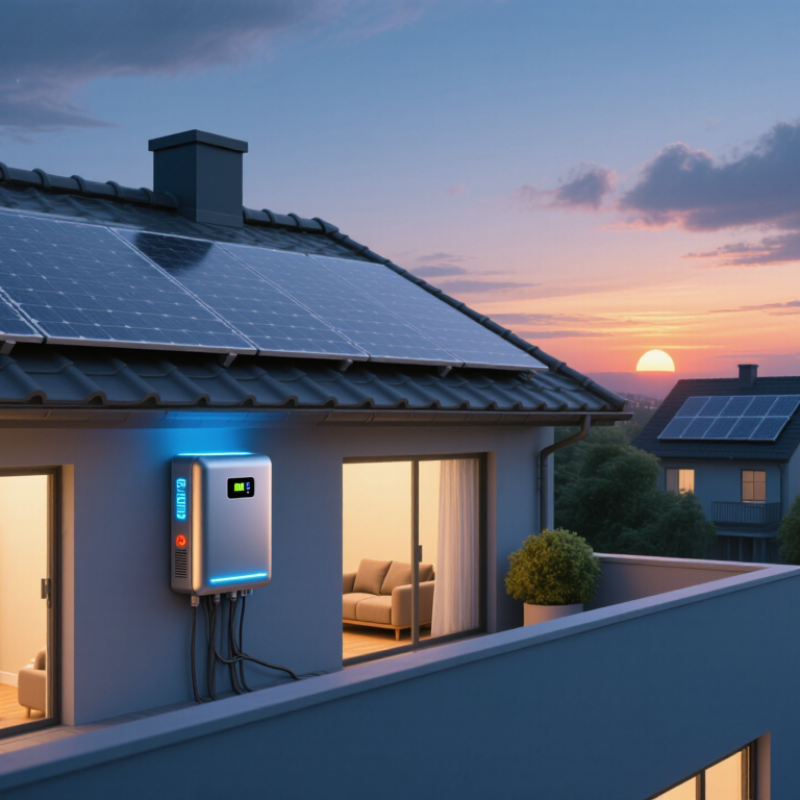
Choosing a domestic solar battery starts with your household’s actual energy use, not the size of your roof. Review several electricity bills and, if available, hourly usage data. Note when demand peaks: evenings, cold mornings, or hot afternoons. A family that runs laundry and cooking after sunset may need more stored energy than its monthly total suggests. One bill is not enough.
Then decide what must stay on during an outage. List essentials such as the refrigerator, a few lights, internet equipment, and medical devices. Check each appliance’s running demand and starting surge; a refrigerator briefly draws more power when its compressor starts. Battery capacity, measured in kilowatt-hours, affects how long appliances can run. Power output, measured in kilowatts, affects how many can run together. These are easy to confuse. I would not assume that backing up the whole home is necessary; a smaller essential-load circuit may fit real needs better. Consider likely outage length and whether your solar system can recharge the battery during cloudy weather.
Tips: Track usage for a week, including evening appliances. Test your essential-load list against a realistic outage. Leave room for uncertainty; household habits change, and estimates can be imperfect.
Example daily energy use for selected essential loads during an outage (kWh/day). Actual consumption varies by appliance, usage, and household.
Add the energy for the devices you need to keep running, then multiply by the number of backup days you want. When sizing a battery, account for usable capacity and conversion losses; check appliance labels or measure real usage for a more accurate estimate.
Capacity and power answer different questions. Capacity, measured in kilowatt-hours (kWh), is the energy tank; power, measured in kilowatts (kW), is how quickly it can deliver energy. A 10 kWh battery supplying a 1 kW load could theoretically run it for ten hours, before losses and reserve limits. Check usable capacity, continuous output, and surge rating against your evening loads. An oven, heat pump, and kettle can exceed a small inverter’s output, even with charge remaining. Annoying, but important.
Lithium iron phosphate (LFP) and nickel-manganese-cobalt (NMC) are common lithium-ion chemistries. LFP often favors thermal stability and cycle life; NMC can store more energy in less space, though actual performance depends on the system. Neither label alone predicts service life. The U.S. Department of Energy’s 2022 Grid Energy Storage Technology Cost and Performance Assessment uses about 85% round-trip efficiency for lithium-ion systems. Treat that as a benchmark, not a household guarantee. Temperature, inverter losses, and reserve settings affect the energy reaching your sockets. Check the warranty’s retained-capacity threshold and cycle conditions, too. I’d leave a little margin; real households are not tidy spreadsheets.
A domestic solar battery must match more than your household’s daily energy use. Check whether your existing inverter supports battery storage, including the required battery chemistry, voltage range, and communication method. Some systems accept a battery directly; others need an additional inverter. Compatibility details are usually listed in the equipment manuals, but older paperwork can be incomplete.
Look at power ratings as well as capacity. A battery may store enough energy for evening use yet deliver too little power for a kettle, pump, and refrigerator running together. Check which circuits can receive backup power during an outage, and whether your electrical panel needs changes. A qualified installer can assess the panel, cable sizes, earthing, and available space before recommending a setup. Small details matter.
Ask how the battery will communicate with the inverter and how software updates are handled. A mismatch can limit charging or prevent the system from operating as intended. If your solar array already produces surplus power, confirm that the battery can accept it at a suitable rate. Also consider where the unit will sit: a shaded, ventilated area may help keep temperatures within its operating range. I have seen homeowners focus on capacity and overlook these practical checks. That is easy to do, and worth correcting before purchase.
A domestic solar battery is not just a box beside the inverter. Installation details affect safety, performance, and future repair costs. Ask a qualified installer to check your electrical panel, inverter compatibility, mounting surface, and required clearances. The battery should suit the site’s temperature and weather exposure. Confirm who handles permits, commissioning, and inspection before accepting a quote. A low equipment price can hide substantial installation work.
Safety needs specific answers. Request documentation showing the system has been tested to recognized battery safety standards, and ask how it will be isolated during an emergency. Follow local fire and electrical requirements; placement rules vary by location and equipment. IRENA’s Renewable Power Generation Costs in 2023 reports an 89% fall in battery storage costs between 2010 and 2023. That trend is useful context, not a residential installed-price estimate: wiring, controls, labor, and permitting still matter. Small distinction. Easy to miss.
Tips: Compare warranty terms line by line. Check years, guaranteed remaining capacity, energy-throughput or cycle limits, and temperature exclusions. Ask whether labor, removal, and replacement are covered, and who provides service if the installer closes. Get answers in writing. A long warranty may still disappoint if its conditions are narrow.
| Decision area | What to compare | Practical guidance | What to verify before purchase |
|---|---|---|---|
| Battery chemistry | Lithium iron phosphate (LFP), other lithium-ion chemistries, or lead-acid | Compare usable capacity, operating limits, maintenance needs, expected cycle life, and safety documentation. Different chemistries have different performance and installation characteristics. | Ask for the battery chemistry, product safety certifications applicable in your region, and the conditions used for any cycle-life claims. |
| Usable energy capacity | Usable kilowatt-hours (kWh), not only nominal capacity | Estimate the energy needed for the appliances you intend to run, including overnight use or essential backup loads. Usable capacity can be lower than the battery’s stated nominal capacity. | Check the stated usable capacity, permitted depth of discharge, and whether the capacity changes with temperature or operating conditions. |
| Power output and backup | Continuous and peak output in kilowatts (kW), backup operation, and supported circuits | Energy capacity indicates how long a battery may supply energy; power output determines which loads it can run at once. Backup during a grid outage generally requires suitable switching and system configuration. | Confirm start-up capability for motor-driven loads, backup duration assumptions, and whether the whole home or only selected circuits will be supplied. |
| AC- or DC-coupled installation | Compatibility with the existing solar inverter or a new hybrid inverter | AC-coupled systems can be suitable for adding storage to an existing solar installation. DC-coupled systems connect on the DC side and may be considered for new or redesigned systems. Suitability depends on equipment compatibility and design. | Request a written system design showing inverter compatibility, metering, expected energy losses, and any equipment that must be replaced. |
| Site and installation location | Indoor or outdoor rating, temperature range, ventilation, clearance, and exposure to water or sunlight | Installation conditions must follow the battery and inverter instructions as well as local electrical and building rules. Extreme temperatures can affect operation and battery performance. | Have the installer assess the proposed location, mounting surface, clearances, access for service, and any local restrictions on where batteries may be placed. |
| Electrical work and approvals | Installer qualifications, permits, inspections, utility notification, and grid connection requirements | Requirements vary by country, region, utility, and system design. Battery installation may require electrical permits, inspection, or approval for connection to the grid. | Confirm who is responsible for permits, inspections, utility paperwork, and final commissioning; obtain these responsibilities in writing. |
| Safety and product compliance | Applicable electrical, battery, and system-level safety standards | Choose equipment with safety documentation and certifications recognized in your location. IEC 62619 is one international safety standard covering industrial secondary lithium cells and batteries, including stationary applications; it does not replace local requirements. | Request the exact certificates and product documentation for the installed model, and check that the proposed configuration is covered. |
| Warranty duration and coverage | Warranty term, covered components, labor, transport, and remedy for a fault | Warranty terms differ between products and markets. A stated term alone does not show whether removal, replacement, shipping, or installer labor is covered. | Read the full warranty document, including exclusions, claim process, transferability, and who provides service if the original installer is unavailable. |
| Warranty performance limits | Minimum retained capacity, cycle or energy-throughput limit, and operating conditions | Some warranties set limits based on time, cycles, or total energy discharged, and may specify a minimum remaining capacity. The applicable limit and conditions vary by product. | Compare the capacity-retention threshold, throughput or cycle cap, temperature requirements, and any restrictions on daily use or charging behavior. |
| Monitoring and maintenance | Monitoring access, software updates, maintenance schedule, and service support | Monitoring can help track charging, discharge, and system alerts. Maintenance needs depend on the battery type and manufacturer’s instructions. | Ask how alerts are handled, whether internet access is required for monitoring or warranty support, and what maintenance is expected. |
| Quotation and total cost | Battery, inverter, backup hardware, installation, permits, and future service costs | Compare complete installed-system quotations rather than battery prices alone. Additional electrical work or backup equipment can affect the final cost. | Request an itemized quote, stated usable capacity and power, included backup functions, and a clear description of exclusions. |
Note: Installation, certification, fire-safety, and grid-connection requirements vary by location. Confirm local rules and product-specific instructions with a qualified installer.
A domestic solar battery’s price is only the starting point. Compare the installed cost, usable capacity, power output, and any required inverter or electrical work. Ask for an itemized quote. A battery that can store plenty of energy may still struggle to run several appliances at once. Check whether backup wiring is included, too.
Incentives can change the numbers, but eligibility and payment rules vary by location and may change over time. Confirm current details with an official government or utility source before subtracting a rebate from your budget. Then estimate savings using your actual electricity bills, not a generic online example. If your evening rate is high, storing daytime solar power may help. If your household uses most power while the sun is out, the benefit could be smaller. That matters.
Long-term value depends on more than a simple payback estimate. Review the warranty’s years, energy-throughput limit, and capacity-retention terms. Consider likely degradation and the cost of replacing related equipment. A spreadsheet can make the outcome look cleaner than it is. Try several scenarios: lower electricity prices, fewer outages, or a future change in household use. Also ask whether a smaller battery could cover essential loads, such as a fridge and a few lights, without paying for capacity you rarely use.
Capacity, measured in kWh, is stored energy. Power, measured in kW, is how quickly energy can be delivered. A 10 kWh battery could theoretically run a 1 kW load for ten hours, before losses and reserves.
Compare its continuous output and surge rating with your loads. An oven, heat pump, and kettle may exceed a small inverter’s output, even when charge remains. Check usable capacity, too.
LFP often emphasizes thermal stability and cycle life. NMC can store more energy in less space. Actual performance depends on the system, so chemistry labels alone cannot predict service life.
Lithium-ion systems are sometimes assessed at about 85% round-trip efficiency. Treat that as a benchmark, not a household guarantee. Temperature, inverter losses, and reserve settings affect usable energy. Leave some margin.
Ask them to check your electrical panel, inverter compatibility, mounting surface, clearances, and site exposure. Confirm who handles commissioning and inspection. A low equipment price may hide labor or wiring costs.
Request documentation showing testing against recognized battery safety standards. Ask how the system can be isolated during an emergency. Placement requirements vary by equipment and location. Specific answers matter.
Compare warranty years, retained-capacity thresholds, cycle or energy-throughput limits, and temperature exclusions. Ask whether labor, removal, and replacement are covered. Get terms in writing. Long warranties can still have narrow conditions.
Use your electricity bills, not a generic online example. High evening rates may improve savings; daytime use can reduce them. Incentive rules vary, so check current details with an official government or utility source. I would treat payback as a rough estimate, not a promise.
Possibly. Check whether it can run a fridge and a few lights, using its usable capacity and output ratings. A smaller system may suit your household better. But your actual loads matter.
Choosing a Domestic Solar Battery starts with understanding how your household uses electricity and which essential devices you want to keep running during an outage. Review your typical energy consumption, peak demand, and backup priorities to estimate the storage capacity and power output you need. Battery chemistry also matters, as it can affect usable capacity, performance, lifespan, and maintenance requirements.
Before making a decision, confirm that the battery is compatible with your solar panels, inverter, and home electrical system, and check what installation work and safety measures are required. Compare warranty coverage, expected service life, and the full installed cost rather than focusing only on the purchase price. Any available incentives may improve affordability, while long-term savings depend on your energy habits and local electricity costs. A suitable choice balances reliable backup, system compatibility, safety, and value over time.

Lithium Idea